
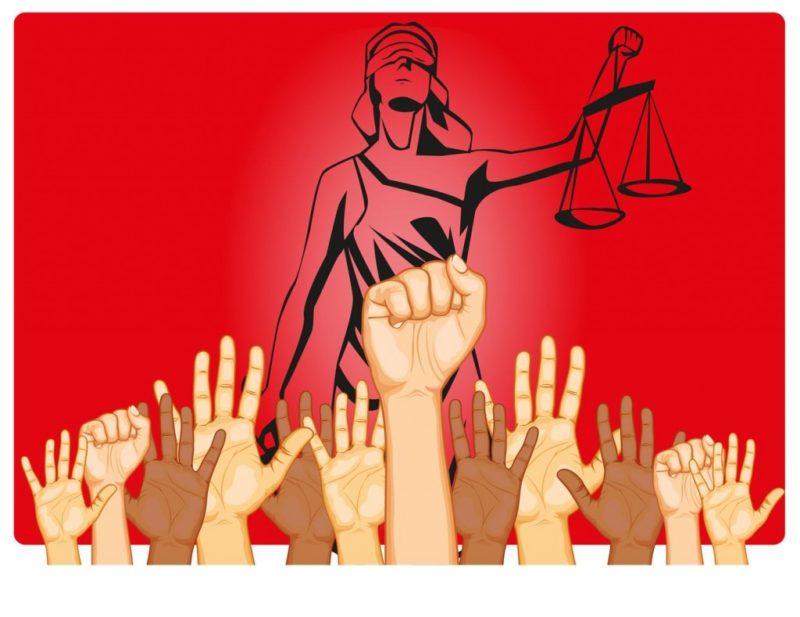
The Meaning of “Social Justice”
By Steven E. Mayer, Ph.D.
Some of you have asked the meaning of social justice. “Social justice” is a hot-button term that can sometimes draw anger, indignation, and passion. You already knew that.
Why “social justice” is a hot-button term
“Social justice” gets hot because it goes directly to peoples’ sense of fairness and unfairness. A personal definition of justice is learned early in life as toddlers at home with brothers and sisters, then later as school children on the playground. And however those incidents turned out for us, we take away from them a sense of right and wrong, fair and unfair, just and unjust.
When people of political persuasions from either the left or right hear “social justice” they quickly go to their hot-button places. Like, “Social justice is Marxism” (said in either pro- or con- tone of voice), or “Social justice is the Sermon on the Mount,” (“yes it is” vs “no it’s not”) or “Social justice is in the Constitution and the Pledge of Allegiance” (“where?”).
Long story short, the meaning of social justice is shaped by personal experience and bounded by culture. People differ in their own comfort zone when it comes to “justice,” whether we like it or not. People who use the phrase must be ready for hostility.
Meanings of “social justice”
From the beginning, the values of social justice flow from doctrines of religious faith, as well as law and politics. These two streams are intertwined in different ways, and play out differently in different cultures over time. One finds references to social justice in writings from the major branches of Christianity, Judaism and Islam, which all hold that before God, all people are equal and must treat each other with respect. Really, all three of those major religions hold that basic principle.
The term “social justice” is foundational in US law and political theory, which got their principles from those faith traditions. We go a little deeper and give examples of how the term “social justice” is used in a four-page paper we did a few years ago when the term was beginning to gain more traction in the field of philanthropy.
For me, “social justice” is another way of saying “a just society,” a term that does not seem to push as many buttons as social justice. It’s an aspirational goal achieved when everyone is treated fairly without reference to race, creed, or color. Or gender, or any other way of categorizing individuals in ways in which they were born or are otherwise not personally responsible.
It’s true that googling the term social justice yields many internet sites presenting the case of people who feel the scales of justice are tilted against them. This shouldn’t be surprising; those who’ve been favored in the way the dice were rolled at birth are not likely to have reason to complain, or call attention to their favored situation, or even see the situation as unfair. This makes it all the more important that the victims of injustice have their advocates in the judicial system and faith traditions in particular, and increasingly in organizations supported by philanthropy.
Is it necessary to have a solid definition of “social justice”?
I would say No; it’s too easy to get caught up in wars of definition. It’s better, IMHO, to be open to ideas and proposals that make a reasonable case for fixing parts of the problem. Let’s putting reasonable ideas into play, try some fixes, bring our best intentions forward, and see how they play out – and then adjust further until situations improve – without getting caught up in a war of words.
Steven E. Mayer / Revised September 17, 2026